Outreach Committee
About the Outreach Committee
Mission and Vision
The mission of the Northern Star Scouting Outreach Committee is to provide training, resources, and support to build community relationships in an effort to achieve the goals described in the Northern Star Scouting Mission Statement and the Northern Star Scouting Diversity Statement.
When successful, the committee's vision of "Diversity will help membership growth and strengthen retention!" will come true and play a key role in every unit's recruiting and retention plan.
Committee Plan of Operations
Plan of Operation
Diversity and Inclusion in Scouting
There are many benefits that Diversity, Equity, Inclusion, and Belonging (DEI&B) can provide to help units, districts, councils, and the entirety of Scouting America to work with youth and adult volunteers in Scouting with different backgrounds and needs. This can make the Scouting program more colorful, cultivate mutual respect and understanding, and introduce more dimensions and varieties into Scouting activities. Scouting is a tremendous opportunity to build bridges and partnerships across all walks of life, and DEI&B can ensure that Scouting is available and accessible to all youth in accordance with Northern Star Scouting's Mission and Vision.
Diversity Facets and Inclusion Barriers
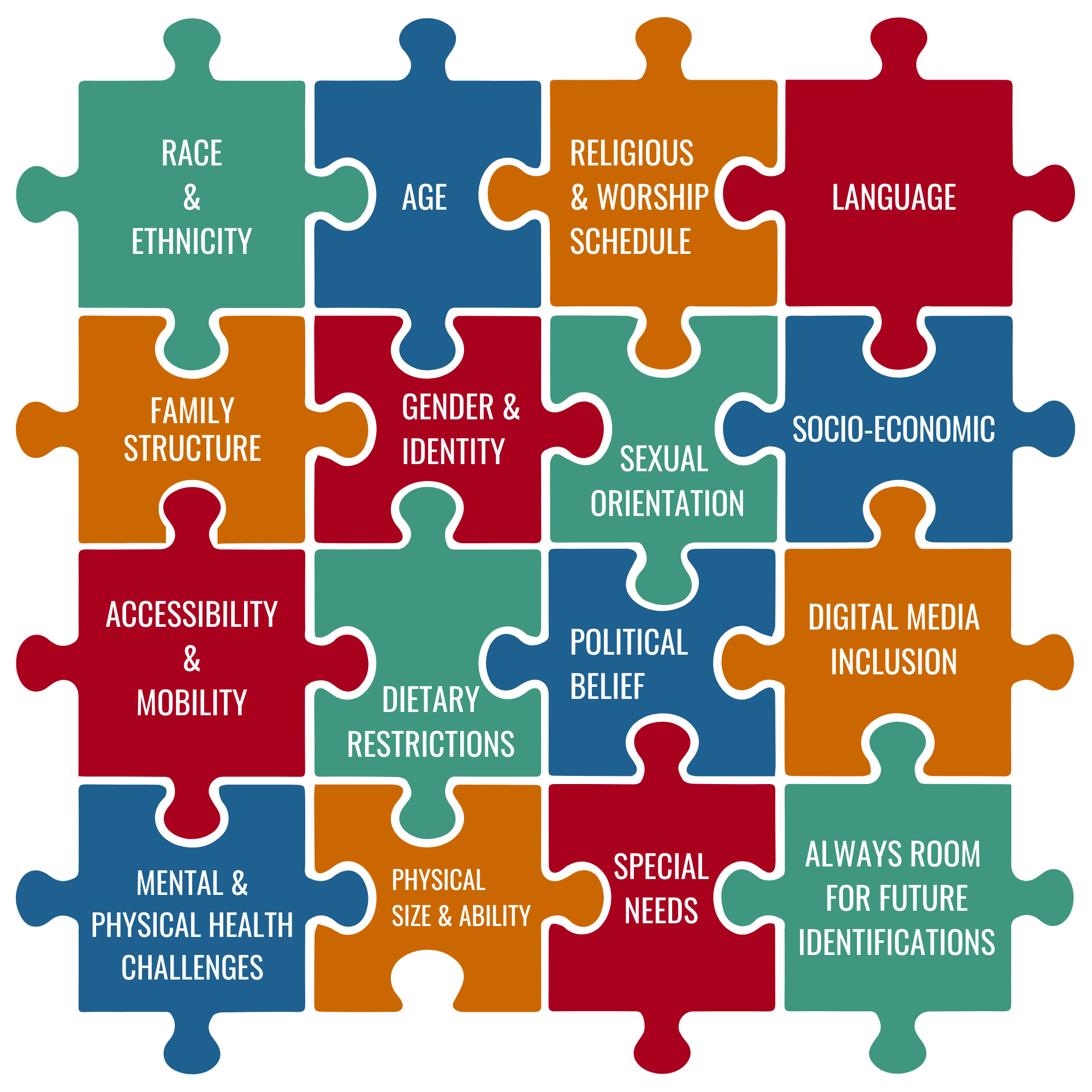
- Race & Ethnicity: Scouting welcomes people of ALL races & ethnicities in our programs.
- Age: People of ALL ages are allowed join the Scouting program as long as they meet the physical requirements of the activities.
- Religion & Worship Schedule: People of any religion, including no religion, can join the Scouting program.
- Language: People who speak any language can join the Scouting program.
- Family Structure: Unit Committees are encouraged to work with families of diverse family structures to encourage scouting event participation.
- Gender & Identity: Youth are encouraged to join the unit that they feel comfortable with regarding their gender identity.
- Sexual Orientation: BSA welcomes youth and adults regardless of their sexual orientation.
- Social-Economic: People of any social-economic backgrounds are welcomed in Scouting. Financial Assistance for registration is available. “No child will be turned away for inability to pay”.
- Accessibility & Mobility: Event planners are encouraged to make provisions for participants regarding accessibility & mobility.
- Dietary Restriction: Event planners are recommended to work with member families regarding dietary restrictions for trips & events.
- Political Belief: ALL who accept Scouting’s values and meet other requirements of membership can join Scouting.
- Digital Media Inclusion: Information in alternate format should be provided to members to address digital and online accessibility & readability concerns.
- Mental & Physical Health Challenges: Resources and support for anyone with mental and physical health challenges who want to be a part of Scouting.
- Physical Size & Ability: Event planners are encouraged to make provisions for participants regarding physical size (e.g., height, weight) and ability (e.g., strength, stamina.)
- Special Needs: Resources and support are in place for anyone with special needs to be a part of Scouting.
How A Unit Can Connect with Diverse Groups
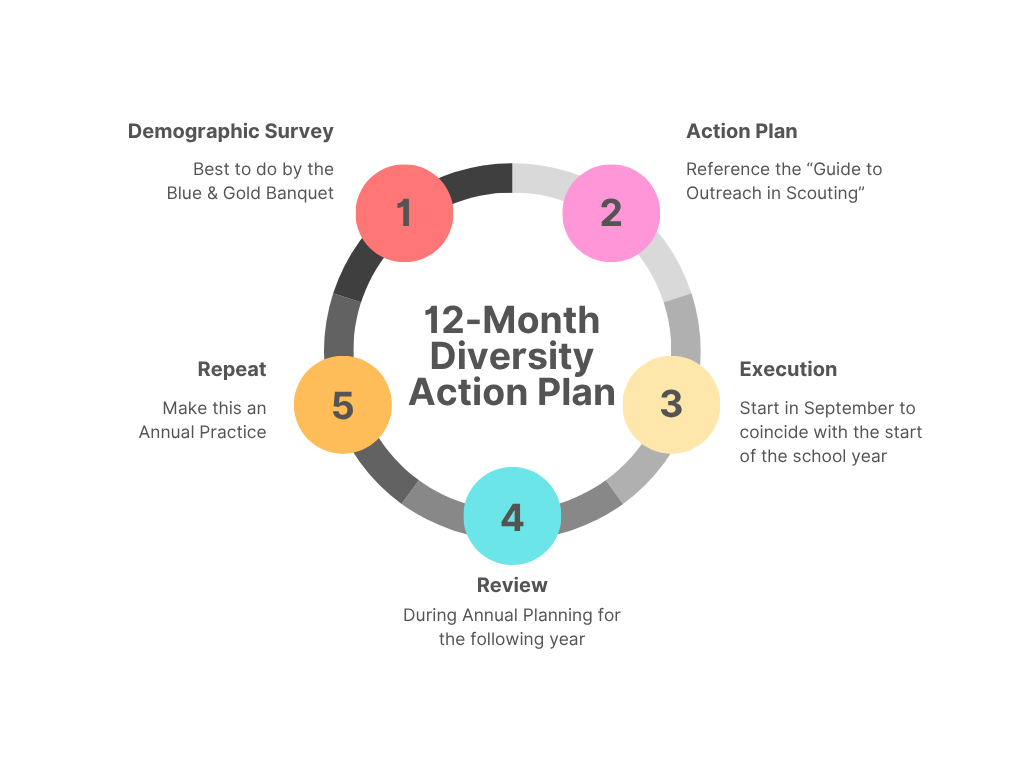
A unit can start by using their annual program planning to identify the goals of their outreach effort and to which diverse groups to reach out to. As shown in the planning cycle diagram below, in the spring, the unit could do a survey on what diverse demographic they currently have to find out if any groups are underserved by the Scouting program in the area. Then they can explore what cultural events these groups would like to do in the year. As a resource, a list of some of the cultural events during the year is available in the "Action Planning Resources" section below, as well as in the "Documents to Download" section above. This is by no means an exclusive list, but will show many common events options that the unit can explore in the calendar year.
DEI&B in the Scouting Program
- In the Cub Scout program, there are electives in the Wolf and Arrow of Light requirements that involve Cub Scouts in diversity.
- In the Scouts BSA program, there are multiple merit badges that involve Scouts in diversity – e.g. Citizenship in Society, American Cultures, and Disabilities Awareness.
- There are special resources and flexibilities in rank advancement for all Scouts with special needs or disabilities, see the Special Needs and Disabilities page.
- There is a 30-min. “Diversity-Equity-Inclusion in Scouting” training video in My.Scouting (login required) for all registered Scouting America volunteers to take.
- This training is linked at the bottom of this page.
- Both Grey Wolf National Youth Leadership Training and Wood Badge have components of diversity in their curriculums.
- There are classes in the University of Scouting and College of Commissioner Service every season on diversity.
- Northern Star Scouting has a Council level Diversity Award for all levels of program (Cub to Adult) – see the Diversity Award section for more information
Working Through Gender Questions in Scouting
- It is the philosophy of Scouting to welcome all eligible youth and adults, regardless of gender, race, ethnic background, sexual orientation, or gender identification, who are willing to accept Scouting’s values and meet any other requirements of membership
- Scouting America does not tolerate bullying or discrimination based on any of these identities.
- Participants are encouraged to register as the gender that best fits their gender identity. For single gender units, the gender on youth registrations must match the gender of that unit.
- Unit leaders can not require that a Scout prove their gender in order to join a Scouting unit.
- For Safeguarding Youth purposes, an participant’s gender is that which is listed on their registration with Scouting America.
- Scouts and Adult Leaders should be Courteous and respect people's preferred names and pronouns.
- Scouts and Adult Leaders should respect the privacy of others and not share information about someone's sexual orientation or gender identity without that person's permission.
Resources for Outreach
If you have needs or requests that are not found in the following list of resources, we encourage you to contact your District Executive, District Director, or the Assistant Director of Field Service, Bob Thielen via the contact information at the bottom of this page.
Diversity Award
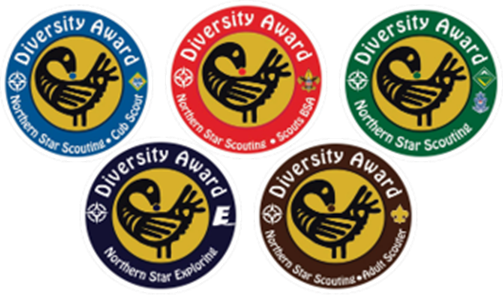
The Diversity Award was created to strengthen inclusiveness and create cultural awareness and understanding. There are six different program levels of the Diversity Award, and each has its own application:
Note: Participants may earn the award at each level as they proceed through the Scouting program. Each level of the award requires that you submit a journal of the activities you did to earn this award, as well as a summary of what you learned while earning this award. If you have questions, contact [email protected] or [email protected].
Training Materials
DEI Quick Introduction Slides
DEI 101 Presentation Slides
Action Planning Resources
The following document contains event dates for cultural events and a list of local organizations that you could partner with to enable your unit to be a part of local events and activities to invite and welcome others to Scouting.
Cultural Organizations
Cultural Events
If you are a unit leader, we have created a short example handout you could hand out or send to prospective families when you are running a booth at any type of event. As these are samples, ensure that you edit it to fit your unit, including adding names and contact information for your key unit leaders and adding your annual unit calendar. Families want to know the upcoming schedule to make sure it fits with their family schedule and youth want to know what kind of fun and exciting things they will be doing!
Example Pack Info Sheet Example Troop Info Sheet Example Crew Info Sheet
Running a Booth at Events
Participating in events is a unique opportunity to connect with new and diverse audiences and share your message. Here are some key steps to ensure a successful experience:
- Research the Event: Thoroughly investigate the event to gain insights into your target audience. Understand their interests, any cultural nuances that resonate with them, and how your offerings can best align with their values. This preparatory step will empower you to create a more meaningful connection with attendees.
- Booth Setup and Design: A visually appealing and well-organized booth is crucial. Carefully plan the layout to maximize space and accessibility. Consider decorations that highlight a theme, creating an inviting atmosphere. Pay attention to signage that clearly communicates your message, and ensure you have all necessary materials such as displays, tables, chairs, and appropriate lighting. Thoughtful promotional items can further elevate your booth and leave a lasting impression.
- Content and Activities: Create engaging materials that reflect your objectives while celebrating the theme of the event. Prepare interactive activities that encourage participation and foster connection with attendees. Whether it’s hands-on demonstrations, informative presentations, or performances, these activities will not only entertain but also deepen the attendees’ understanding of your mission.
Always approach a group that has not been introduced to Scouting in a gentle manner. A Scout is Friendly, Courteous, and Kind! Do not “sell Scouting” right away in the first conversation. Instead, ask “what kind of fun things do your youth like to do?” to find a match in interest. When trying to make new families feel welcome at an Open House or similar fun event, a unit T-shirt or polo shirt may be a better choice than the official Scout uniform. The formal uniform can sometimes appear too "forceful," especially to those from countries where uniformed military or police are highly authoritative.
If you are with a troop, the Scouts should carry out the plan including inviting other youth to attend and engaging the prospective youth during the event. The Scouts' parents should spend time with the prospective new parents, as they will be best equipped to answer their questions.
By investing time and creativity into these aspects, you will create an engaging booth that resonates with your audience and leaves a positive impact at the event.
Other Resources